
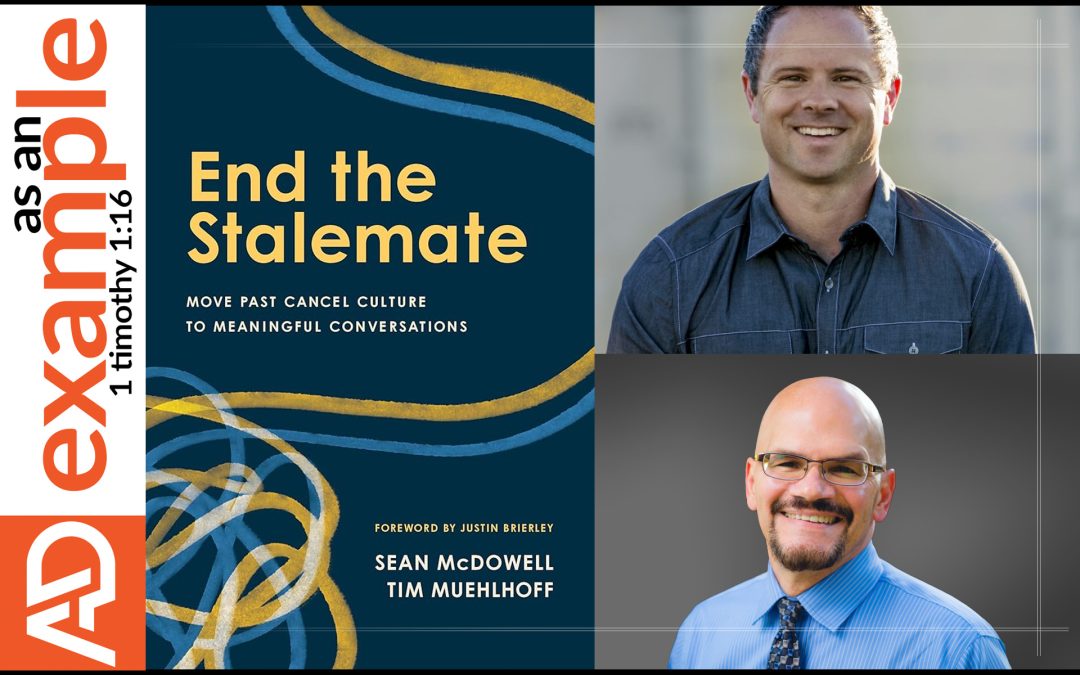
It is no exaggeration to say that we live in an age of outrage and a culture of cancel, which does not facilitate meaningful, charitable discussion. Harvard researcher Arthur Brooks argues that the problem, in fact, goes deeper than that. In too many areas of disagreement, we have a culture of contempt rather than simply anger. Rather than disagreeing but maintaining relationship, our culture encourages us to sever relationship with those with whom we disagree. Sean McDowell and Tim Meulhoff are concerned that contempt is a decidedly unchristian approach to life. Rather than contemptuously disassociating from anyone who does not share our precise worldview, Christians should “model how to hold firm to convictions while still engaging others with compassion, empathy, and perspective-taking.”
In conversation with those with whom we disagree, we are easily tempted to talk over them and to misrepresent them. We are frequently tempted to express opinion before we have even understood. We should do better, and McDowell and Meulhoff want to help us to do better. In End the Stalemate, they write to help us “move past cancel culture to meaningful conversations.” Christians, in particular, they argue, as God’s ambassadors on earth, must move beyond outrage and cancel culture to engage in meaningful and charitable conversation with those with whom they disagree.
The authors argue that charity must be shown to those with whom we disagree in at least three stages.
First, we must properly prepare to charitably engage during pre-conversation. Have we embraced a charitable attitude before we enter the conversation? As we anticipate the discussion, have we adopted an assume-the-best stance toward the person with whom we know we will disagree. Have we tried to put ourselves into their shoes to understand where they are coming from before we even begin the conversation?
Second, we must engage charitably in the conversation. They suggest a four-step approach to this: (1) listen carefully to understand your conversation partner’s perspective; (2) paraphrase their perspective back to them in a way that fairly represents what they believe, asking if you have accurately understood; (3) work hard to find areas of commonality; and (4) ask clarifying questions where necessary. These steps will prepare you to engage well in good-faith discussions, even as you pray for God’s Spirit to help you overcome defensiveness and anger.
Third, we must be careful to speak charitably about our conversation partner in post-conversation. Once the conversation is over and we are back with our in-group, we must be careful not to strawman the conversation. Speak of them and their views in the way that you would want them to speak of you and your views. Too often, we fear that listening well and accurately representing the views of others necessarily implies affirmation. This need not be the case.
The authors’ counsel is not only intensely practical, it is also deeply rooted in Scriptural principle. From drawing on various proverbs to rooting their approach in the incarnation, the authors reveal a heart to remain faithful to biblical and historic Christian truth, even as they argue for charity in disagreement. You may not agree with everything you read—indeed, the authors themselves demonstrate their disagreement—but you will, I think, appreciate the tone with which the authors write.
Predictably, since the book is written from an American perspective, some of the material is particularly applicable to an American context. Nevertheless, since the principles that the authors espouse are rooted in Scripture, they transcend culture, even if some of the specific examples are less applicable than others outside of an American context.
Toward the end of the book, each author directs questions at the other to demonstrate their own disagreements with each other and how to charitably discuss and disagree. The authors are transparent with their own failings but encourage their readers that growth is possible The closing chapter offers some helpful diagnostic advice to help ascertain whether conversation will be helpful to begin with.
An accessible and relatively quick read, McDowell and Meulhoff’s work will prove a helpful read for anyone who is serious about communicating meaningfully with those with whom they disagree.

About the author
About the author