
This past Friday night, the world witnessed another elaborate opening ceremony of a major sporting event. Third-time Olympic host city, Paris, went out of its way to create an extravagant and, at times, perplexing display, which had little to do with sport. It has been estimated that the ceremony cost $150m.
I saw none of it live. I have long since become disillusioned by the baffling extravagances that dominate sporting ceremonies. It turned out to be impossible, however, to avoid the controversy that erupted soon after. Within hours of the ceremony, I began seeing claims that event organisers had deliberately targeted Christians in a “blasphemous” interpretation of the Last Supper.
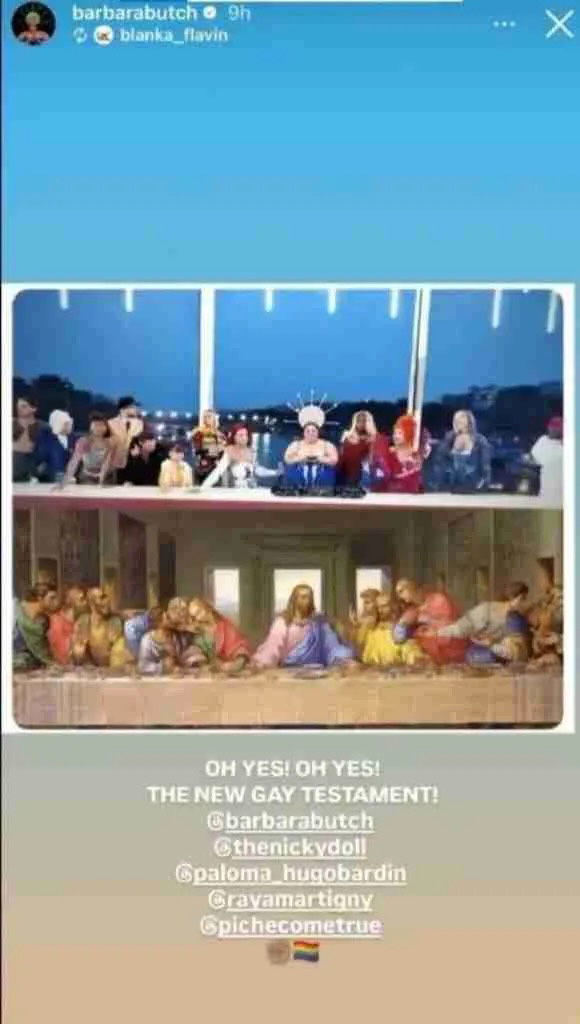
Immediately after the opening, Barbara Butch, the woman at the centre of the table scene, posted a photo of the event above a picture of Da Vinci’s The Last Supper to her Instagram Stories, which she titled “The New Gay Testament.” She quickly removed it.
The response was swift and far-reaching. Athletes complained to organisers. Public figures—religious, political, and social—expressed disapproval. Donald Trump labelled the spectacle “a disgrace,” while a Minnesota-based bishop called it “a kind of disgusting, arrogant mockery.” American tech company C Spire pulled its advertising firm the Games in protest. A French lawyer announced his plans to formally complain: “As a Catholic, I swear before God that I will complain. I will do this starting Monday and invite all Christians to accompany me to address the spiritual damage we have suffered.” Even a left-wing political party registered its disapproval, its leader stating,
I didn’t appreciate the mockery of the Christian Last Supper, the final meal of Christ and his disciples, which is foundational to Sunday worship. Of course, I’m not getting into the criticism of “blasphemy.” That doesn’t concern everyone.
But I ask: what’s the point of risking offending believers? Even when one is anticlerical! We were speaking to the world that evening.
This did little to quell the controversy, and the International Olympic Committee soon issued a half-hearted apology: “Clearly there was never intention to show disrespect to any religious group. On the contrary, we intended to show tolerance and community. If people have taken any offence then we are sorry.”
In addition to the backlash described above, Christians immediately took to social media to express outrage.
Some insisted that it was time for Christians to stop accepting the mockery of our faith and to “do something” about it. Even Elon Musk lamented that Christianity has become “toothless” and opined, “Unless there is more bravery to stand up for what is fair and right, Christianity will perish.”
The suggestions as to what to do were varied. Some called for respectfully boycotting the Games. Others openly returned mocking for mocking. One YouTuber proudly proclaimed, “If you mock Jesus of Nazareth, I’m going to mock you” and proceeded to disgracefully insult Butch’s appearance. One professional athlete, whose X status reads, “Jesus Christ is King of kings and Lord of lords,” responded, “They/them, I hate you.” In a flood of emotionally charged posts, he directed expletives at “Jezebel” and wrote, “Burn in hell, trans people.”
Those, of course, were extreme response. Most were more measured. The French Catholic Bishop’s Conference lamented that the “ceremony unfortunately included scene of derision and mockery of Christianity” and expressed solidarity with “all Christians on every continent who have been hurt by the outrageousness and provocation of certain scenes.”
Dan Darling, of the Southwestern Baptist Theological Seminary “was appalled at the grotesque mockery of the Lord’s Supper in the opening ceremonies.” Maltese Archbishop Charles Scicluna called it a “gratuitous insult to the Eucharist.”
As I have reflected on the debacle the last few days, I have had several thoughts.
My initial thought, seeing the flood of outrage within hours of the event, was that there was probably some wisdom in slowing down. Was the near instantaneous outrage warranted? There have been too many instances in recent years of instant outrage looking sheepish and foolish once explanations have been offered. Nick Sandmann, anyone? Jussie Smollett? As I saw organisers quickly denying any artistic connection to the Last Supper, I thought that a faithful Christian response would probably be “quick to hear, slow to speak, slow to anger” (James 1:19).
Second, even if it turned out to be an intentional parody of the Last Supper, I wondered if blasphemy was a category error. To blaspheme is to speak sacrilegiously about God or sacred things, but the comparisons I was seeing were comparisons to Da Vinci’s fresco, which is hardly sacred. The Last Supper is Da Vinci’s largely inaccurate portrayal of a biblical narrative. A culturally accurate portrayal would look quite different to what he produced. It seemed a stretch to speak of a parody of Da Vinci’s art as “blasphemy.”
In this regard, it was most ironic to see some of my more formally Reformed brothers expressing outrage. Some of these brothers would technically consider Da Vinci’s painting to be a breach of the second commandment. It seemed strange to take offence at a parody of a painting that, in itself, was an idolatrous image.
Third, I thought that the ceremony might have been the most French thing I’ve ever seen. One goal of an opening ceremony is to highlight the culture of the host city and the event did not disappoint.
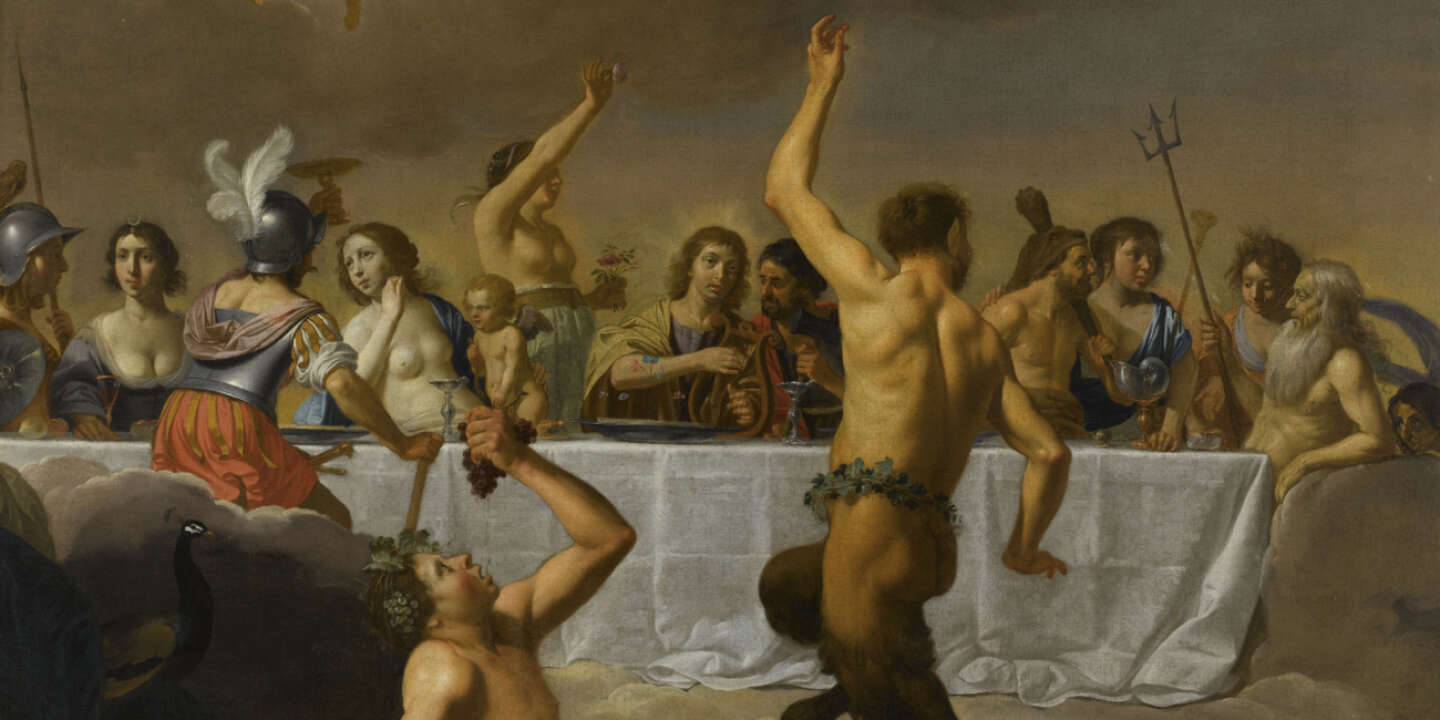
But it is precisely because it was so French that I think the offence was intentional. I might stop short of calling it blasphemous, but France seems to have something of a legacy of intentionally offending religious sensibilities. Who can forget the infamous Charlie Hebdo incident of 2007? In the blasphemy trial that followed this incident, a French judge ruled that it is possible and acceptable to insult a religion without insulting its followers. A police report from March this year highlighted a 32% rise in racist, xenophobic, and religion-based offences in Paris in 2023. Religious offence is simply the air that France breathes. Everything about the event suggests that the Paris organisers, in very French fashion, aimed to be intentionally transgressive.
So, how should Christians respond? Is it time for us to stop accepting these insults and to “do something” about it? Is it time to return insult for insult? How would Scripture have us respond? We could say several things in response. Let me highlight three.
First, we should not be surprised. For too long, Christians in the Westernised world have assumed that Jesus promised his church respect and social power. In fact, Jesus told his followers that they would be hated (John 15:18–20). The power that Jesus promised his church was not political or social but the power to be witnesses (Acts 1:8). The word translated “witnesses” is the word from which we derive the English word “martyr.” The church’s power is the power of martyrdom!
Second, we should not respond in kind. Peter exhorted, “Do not repay evil for evil or reviling for reviling, but on the contrary, bless, for to this you were called, that you may obtain a blessing” (1 Peter 3:9). Paul concurred: “Do not be overcome by evil, but overcome evil with good” (Romans 12:21). To insult the artistic director or his actors is not only immature; it is sinful.
Third, we should be cautious of thinking that our voice must be heard. I say this with some reservation. It is sometimes appropriate to speak up. Paul appealed to his Roman citizenship when it served Great Commission purposes. But we should be selective in this regard. More often than not, we should “aspire to live quietly, and to mind your own affairs, and to work with your hands, as we instructed you, so that you may walk properly before outsiders and be dependent on no one” (1 Thessalonians 4:11–12).
If you were offended at the display, know that that is probably precisely what the organisers intended. But recognise that insult and offence is precisely what we should expect as Christians as we quietly live out our gospel convictions in a way that, even if we are mocked, our Christian testimony will answer in a way that we don’t need to with our words.